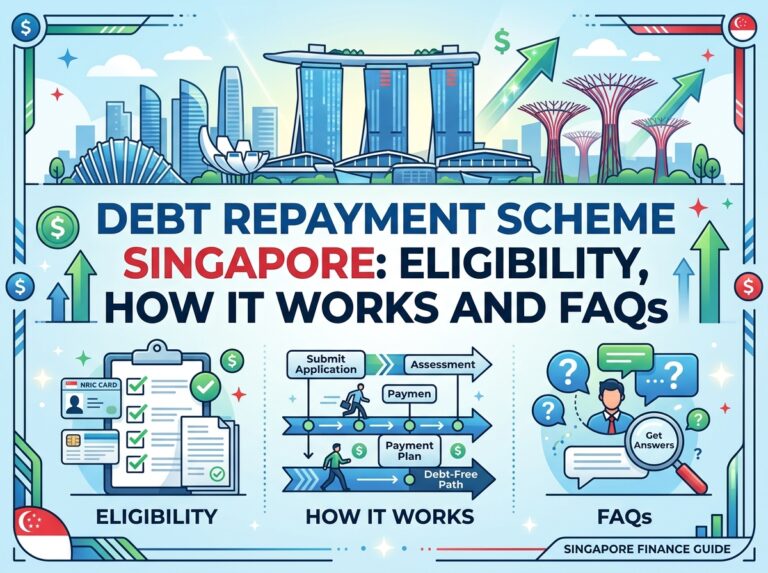

Why Debt Feels Like a Trap in Singapore
Credit card bills. Personal loans. Overdue notices. For many Singaporeans, debt feels like quicksand — the harder you struggle, the deeper you sink. Interest snowballs, late fees stack up, and your stress levels skyrocket.
But here’s the truth: you don’t have to hit bankruptcy to get help. A structured Debt Repayment Scheme(DRS) can stop the spiral and put you back in control of your finances. Instead of juggling multiple creditors and endless late fees, you commit to a structured plan that helps you repay debt in a realistic timeframe.
What is a Debt Repayment Scheme?
A Debt Repayment Plan is a structured arrangement that allows you to consolidate multiple unsecured debts into one manageable monthly payment. Unlike taking on another loan, a repayment plan restructures what you already owe so that repayment becomes sustainable.
There are two main formats available in Singapore:
- Debt Management Programmes (DMP) or Debt Consolidation Plan (DCP): A voluntary repayment arrangement where multiple unsecured debts are combined into one plan with a fixed monthly instalment.
- Debt Repayment Scheme (DRS): A statutory, pre-bankruptcy programme under the Ministry of Law for individuals with unsecured debts of S$150,000 or less. Approval is required by the Official Assignee (OA).
Both aim to simplify repayment, reduce stress, and provide a clear path toward becoming debt-free.
Debt Management Programme (DMP) Explained
A DMP is useful if you are struggling with high-interest unsecured debts such as credit cards and personal loans. Instead of keeping up with multiple banks and deadlines, you make one consolidated monthly payment.
Key benefits of a DMP include:
- A single monthly instalment instead of juggling multiple bills.
- Reduced or frozen interest charges negotiated with creditors.
- A repayment period typically lasts 5 years to 10 years.
Who is a DMP suitable for?
- Individuals with a steady income who can commit to regular payments.
- Those with multiple unsecured debts (e.g., credit cards, credit lines, personal loans).
- Borrowers who want to avoid bankruptcy but need a structured solution.
What debts are usually included?
- Credit card balances.
- Personal loans.
- Unsecured credit facilities.
What debts are not usually covered?
- Secured loans such as mortgages and car loans.
- Business loans tied to corporate entities.
A DMP can be a lifeline if you’re overwhelmed by high-interest debt but still have a stable income. It protects you from the constant stress of creditor calls while giving you a clear roadmap to becoming debt-free.
The Debt Repayment Scheme (DRS) Explained
The Debt Repayment Scheme (DRS) is a more formal alternative that provides legal protection while you repay your debts.
Eligibility requirements:
- Unsecured debts not exceeding S$150,000.
- You must not already be bankrupt.
- You must have a regular income to sustain monthly repayments.
Application process:
- You will be referred to the DRS by the courts or through bankruptcy proceedings.
- The Official Assignee (OA) reviews your income, expenditure, and repayment proposal.
- Creditors may be consulted before approval.
How it works once approved:
- You make monthly instalments for up to 5 years.
- As long as you comply, creditors cannot sue or commence legal proceedings.
- Your assets are not liquidated the way they would be in bankruptcy.
Key advantage:
The DRS is often the final chance to avoid bankruptcy. It allows you to keep your assets, avoid the long-term stigma of bankruptcy, and gradually rebuild your financial life.
💡 Important: The DRS is not a loan. It restructures your existing debts under a legal framework.
Benefits of a Debt Repayment Scheme
Why should you consider a repayment plan instead of struggling month after month?
- ✅ One monthly payment instead of juggling multiple deadlines.
- ✅ Lower or frozen interest, preventing your debt from growing further.
- ✅ A fixed repayment period, usually up to 5 years.
- ✅ Peace of mind knowing creditors cannot pursue legal action under the DRS.
- ✅ Improved financial discipline — structured repayment builds better money habits.
- ✅ Reduced stress — no more daily creditor calls, overdue letters, or sleepless nights.
A repayment plan is more than just a financial arrangement — it’s a lifeline that provides stability, clarity, and the confidence to move forward without fear of debt spiralling out of control.
Risks of a Debt Repayment Scheme
It’s important to understand the challenges as well:
- ❌ Strict payment commitment: Missing instalments can cause the plan to fail.
- ❌ Lifestyle adjustments: You may need to cut back on non-essential spending.
- ❌ Credit standing: Your credit record will reflect debt restructuring during the plan.
- ❌ Bankruptcy risk: If you fail to comply, creditors can resume legal action.
Credit report impact explained:
- Your credit score will be affected during repayment; however, usually, to be eligible for the Debt Repayment Scheme, your credit score has already been affected.
- The record of the repayment plan may remain for some time even after completion.
- However, this impact is still far less damaging than bankruptcy, which stays on record for years and severely limits future financial access.
Why Discipline is Key
A debt repayment plan requires consistency. To succeed, you must:
- Pay on time every month.
- Avoid taking on new loans or credit cards.
- Monitor your budget and track expenses.
Without discipline, even the best repayment plan will fail. At EDUdebt, we help clients not only set up repayment plans but also develop the habits needed to stay on track.
The Credit Card Debt Trap
In Singapore, credit card debt is the most common source of financial stress. With interest rates often above 24% per year, balances grow rapidly if only minimum payments are made.
A repayment plan can:
- Consolidate your balances into one structured repayment.
- Stop the cycle of minimum payments that barely reduce the principal.
- Encourage healthier financial management by pausing card usage during repayment.
Left unchecked, credit card debt can spiral into bankruptcy. A repayment plan provides a timely intervention before it gets that far.
Staying Debt-Free After a Plan
Completing a DRP is only the first step. To remain debt-free, you should:
- 🔹 Pay off high-interest loans early whenever possible.
- 🔹 Automate payments to avoid missed deadlines.
- 🔹 Build savings before making large purchases.
- 🔹 Keep within MAS limits: unsecured debt should not exceed 12x your monthly income.
Many debtors relapse because they see the end of a repayment plan as a green light to borrow again. Building healthy money habits ensures your financial freedom lasts.
What If You Can’t Keep Up?
Unexpected life events such as job loss or medical expenses can make repayment difficult. If this happens:
- Contact your financial institution immediately.
- Discuss restructuring options instead of defaulting.
- Stay cooperative — ignoring calls damages your credit rating and reduces your options.
Proactive communication often leads to more flexible solutions. Creditors are more willing to help those who show commitment to repayment.
Common Mistakes Debtors Make
Many debtors worsen their situation by:
- Ignoring communication from creditors.
- Continue to use credit cards during repayment.
- Paying only the minimum due.
- Delaying action until bankruptcy is the only option.
Avoiding these mistakes can save you from years of financial hardship. Seeking help early with EDUdebt ensures you have the best chance of a positive outcome.
How EDUdebt Supports You
At EDUdebt, we go beyond explaining options — we provide hands-on support. Our process includes:
- Free consultation: Understand your current debt situation with no upfront cost.
- Debt assessment: We analyse your income, obligations, and repayment capacity.
- Solution guidance: We advise if you qualify for government-regulated programmes like the DRS.
- Creditor negotiation: We help arrange affordable terms with your creditors.
- Ongoing support: We stay with you throughout your repayment journey.
Our goal is to reduce your debt stress and provide a clear, structured path back to financial freedom. With EDUdebt, you’re never left to face creditors alone.
FAQs About Debt Repayment Scheme [Accordion]
Q1: Will a repayment plan affect my credit score?
Yes. Your credit record will reflect debt restructuring. But once completed, your debts are cleared, and your standing improves.
Q2: How long does a plan last?
Most plans last up to 5 years, depending on your debt amount and repayment ability.
Q3: Can secured loans like housing loans be included?
No. Repayment plans typically cover unsecured debts such as credit cards, credit lines, and personal loans.
Q4: Can I still use credit cards while on the plan?
No. To avoid relapsing into debt, credit card usage is suspended during repayment.
Q5: Who decides if I qualify for the DRS?
The Official Assignee (OA) under the Ministry of Law evaluates eligibility based on debt, income, and repayment capacity.
Q6: Does interest stop completely under a repayment plan?
In many cases, interest may be reduced or frozen, but this depends on creditor agreements and scheme conditions.
Q7: Can I apply if I already have a debt consolidation loan?
Usually, no. Debt consolidation loans and repayment schemes are separate solutions. If you already have one, other options may be limited.
Q8: Will my employer know if I enter a repayment scheme?
For most voluntary repayment arrangements, no. For statutory schemes like the DRS, records are kept with the Insolvency Office, but employers are generally not informed unless required by law.
Conclusion: Is a Debt Repayment Scheme Right for You?
A Debt Repayment Scheme is not a quick fix — it requires commitment and discipline. But for many Singaporeans, it is the difference between spiralling into bankruptcy and finally regaining financial control.
If you are struggling with credit card bills, personal loans, or overdue payments, the earlier you act, the more solutions you will have.
At EDUdebt, we help you:
- Understand your repayment options.
- Determine your eligibility.
- Build a personalised plan to become debt-free.
📞 Take the first step today — book your free consultation with EDUdebt and regain control of your finances before debt takes control of you.
Place the button “Book Your Free Consultation Now” At https://www.edudebt.sg/book-a-free-consultation/