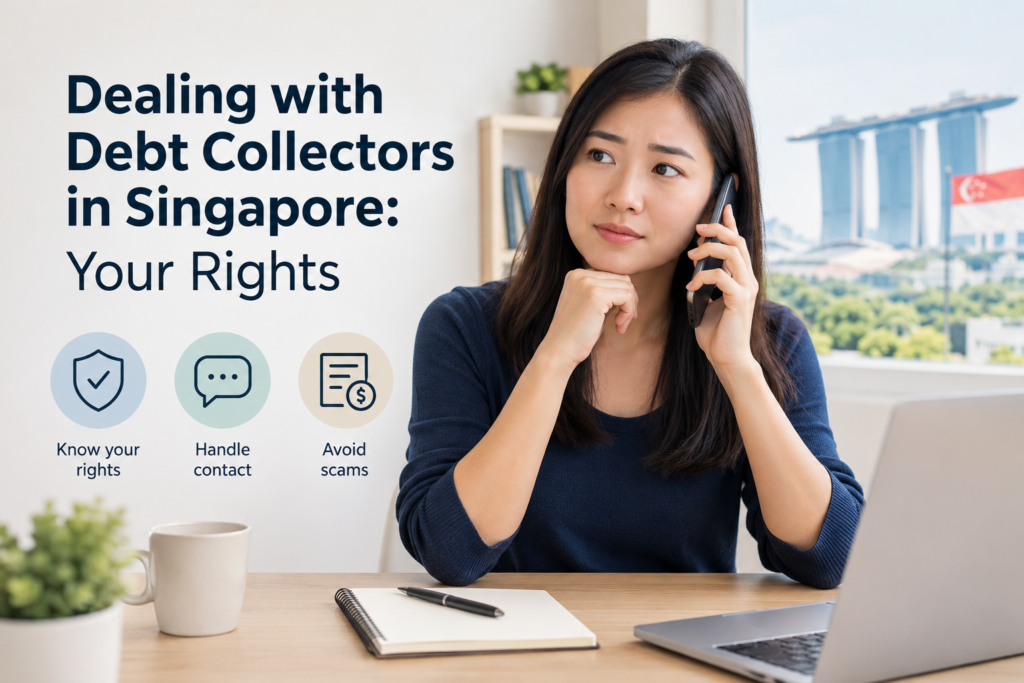
Dealing with Debt Collectors in Singapore: Your Rights and What You Can Do
Receiving a call from a debt collector is rarely a pleasant experience. If you have fallen behind on your repayments, you may already be worried about how to manage your bills. Having someone repeatedly call you or turn up at your home can make an already difficult situation feel even more overwhelming.
But before you panic, it helps to understand what debt collectors are allowed to do, where the boundaries lie, and what you can do if their behaviour becomes threatening.
In Singapore, debt collectors can contact people to recover outstanding payments, but they must operate within the law. Knowing the difference between legitimate debt collection and harassment can help you protect yourself without making a stressful situation worse.
Can debt collectors contact you in Singapore?
Yes. If you owe money, a creditor or someone authorised to collect the debt may contact you to discuss payment. Depending on the circumstances, this could involve phone calls, messages, letters or a visit to your home.
Receiving a call from a debt collector does not automatically mean that you have done something wrong beyond falling behind on a payment. It also does not mean that you must agree to a payment arrangement immediately just because someone is pressuring you to do so.
What matters is how the debt is being pursued.
Singapore’s Debt Collection Act 2022 introduced a licensing framework for debt collection businesses and an approval regime for individuals working as debt collectors, subject to the Act’s exclusions and class-licensing arrangements. The framework took effect in stages, with the main licensing requirements commencing in 2024. The Singapore Police Force provides further information on debt collection licensing.
These requirements are intended to regulate the industry. They do not mean that every person who contacts you about an unpaid bill is necessarily operating unlawfully. For example, a bank or other regulated business collecting money owed directly to it may fall under a different arrangement.
If you are unsure who is contacting you, ask for the person’s name, the organisation they represent and details of the debt. You can then verify the information independently using the creditor’s official contact details.
What if a debt collector visits your home or workplace?
A home visit can feel intimidating, particularly if you are worried that your family, neighbours or colleagues might find out about your financial situation.
However, a visit does not automatically mean that the collector has the right to enter your home, force you to pay on the spot or take your belongings. Do not assume that someone has enforcement powers simply because they say they are collecting a debt.
If someone visits you, you can ask them to identify themselves, explain which creditor they represent and provide details of the outstanding amount. You do not need to make a hurried decision about a repayment arrangement at your doorstep.
You can also ask to communicate in writing if that would help you keep a clearer record of the discussion.
If a collector visits your workplace, it is reasonable to be concerned about your privacy and reputation. Keep a record of what happened, including whether the person disclosed your debt to others, threatened you, or kept contacting you in a way that caused alarm or distress.
The circumstances matter. A visit or an uncomfortable conversation is not automatically unlawful, but threats, intimidation or other conduct that crosses legal boundaries should not simply be accepted as part of owing money.
When does debt collection become harassment?
There is an important difference between asking someone to repay a debt and using threatening or abusive behaviour to pressure them.
For example, you may be concerned if someone threatens violence, threatens to damage your property, repeatedly contacts you in a way that causes serious distress, or uses your personal information to intimidate or shame you.
Whether particular behaviour amounts to harassment or another offence depends on the facts and the applicable law. Not every repeated call is automatically unlawful, and a disagreement about repayment does not by itself establish harassment.
Singapore’s Protection from Harassment Act provides avenues for dealing with certain acts of harassment and other conduct that causes alarm or distress. Depending on what happened, possible routes may include making a police report or seeking remedies through the courts. You can read the Singapore Courts’ guidance on protection from harassment to understand the available options.
If you feel threatened or believe a crime has occurred, take the situation seriously. You do not have to wait until the behaviour becomes worse before seeking advice or reporting your concerns.
What should you do if a debt collector crosses the line?
Start by keeping a clear record of what happened. When you are stressed, it can be difficult to remember every call or conversation accurately later. A simple record can help you explain the situation if you decide to make a complaint or seek legal advice.
Write down the date and time of each incident, the phone number or identity used, what was said, and whether anyone else witnessed it. Keep relevant messages, letters, call records and other evidence. If you have photographs or recordings obtained lawfully, preserve them as well.
Next, verify the debt and the collector’s identity. Contact the original creditor through its official website or published contact number rather than relying only on the contact details given by the person who approached you. Ask for a breakdown of the amount claimed if you do not recognise the debt or believe the figure is incorrect.
If the behaviour appears to involve threats, harassment or other possible offences, consider making a police report. If you believe a debt collection business or collector has breached the applicable licensing requirements, you can also refer the matter to the Singapore Police Force through its official channels.
For disputes involving harassment, the Singapore Courts’ website explains the possible remedies under the Protection from Harassment Act. The appropriate route will depend on the nature and seriousness of the conduct.
If you are in immediate danger, move somewhere safe and call 999 for police assistance.
What if you really do owe the money?
It is possible to experience inappropriate debt collection behaviour and still have an outstanding debt to resolve. These are two separate issues.
If the debt is genuine, ignoring every message or refusing to discuss repayment may not make the problem disappear. At the same time, agreeing to an amount you cannot realistically afford may leave you struggling to meet your other essential expenses.
Take some time to review your income, household expenses, existing repayments and the total amount you owe. If you are dealing with several creditors, look at the overall picture rather than focusing only on the person who is contacting you most frequently.
You can then consider what repayment arrangements may be available and whether you need independent financial or legal advice. The most suitable approach will depend on the type of debt, your financial circumstances and the options available to you.
If you are unsure where to begin, a consultation can help you organise the information and understand the possible next steps. You should be able to ask questions and understand the available options before deciding whether to use any particular service.
You do not have to work everything out at once
Debt problems can be difficult to talk about, especially when you are worried about being judged or contacted repeatedly. But avoiding the situation because it feels overwhelming can make it harder to understand what is happening and what choices you have.
Start with the basics: establish whether the debt is genuine, keep records of any concerning behaviour, and seek help if you feel threatened or believe your rights have been breached. If you are struggling with repayments, take a wider look at your finances before committing to a plan.
At EDUdebt, we offer a free debt consultation to help you understand your financial situation and review possible repayment options in Singapore. The consultation is an opportunity to discuss your circumstances and understand what you may be able to do next. You can decide for yourself whether you wish to take things further.
If you are feeling overwhelmed by your debts, you can contact EDUdebt to arrange a free consultation and discuss your situation without pressure.
This article provides general information about debt collection in Singapore and is not legal advice. The appropriate steps depend on the circumstances of each case. If you need advice about your legal rights or a specific dispute, consider consulting a qualified legal professional.